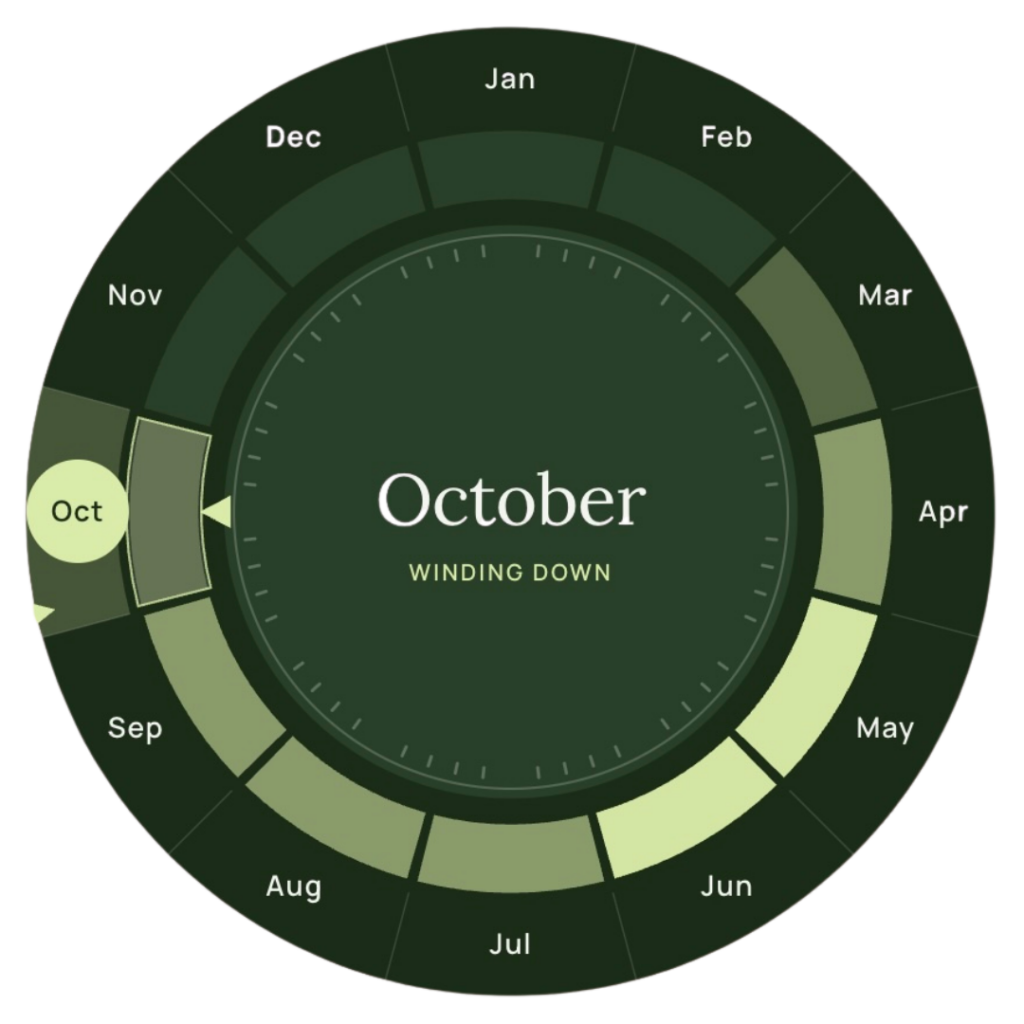
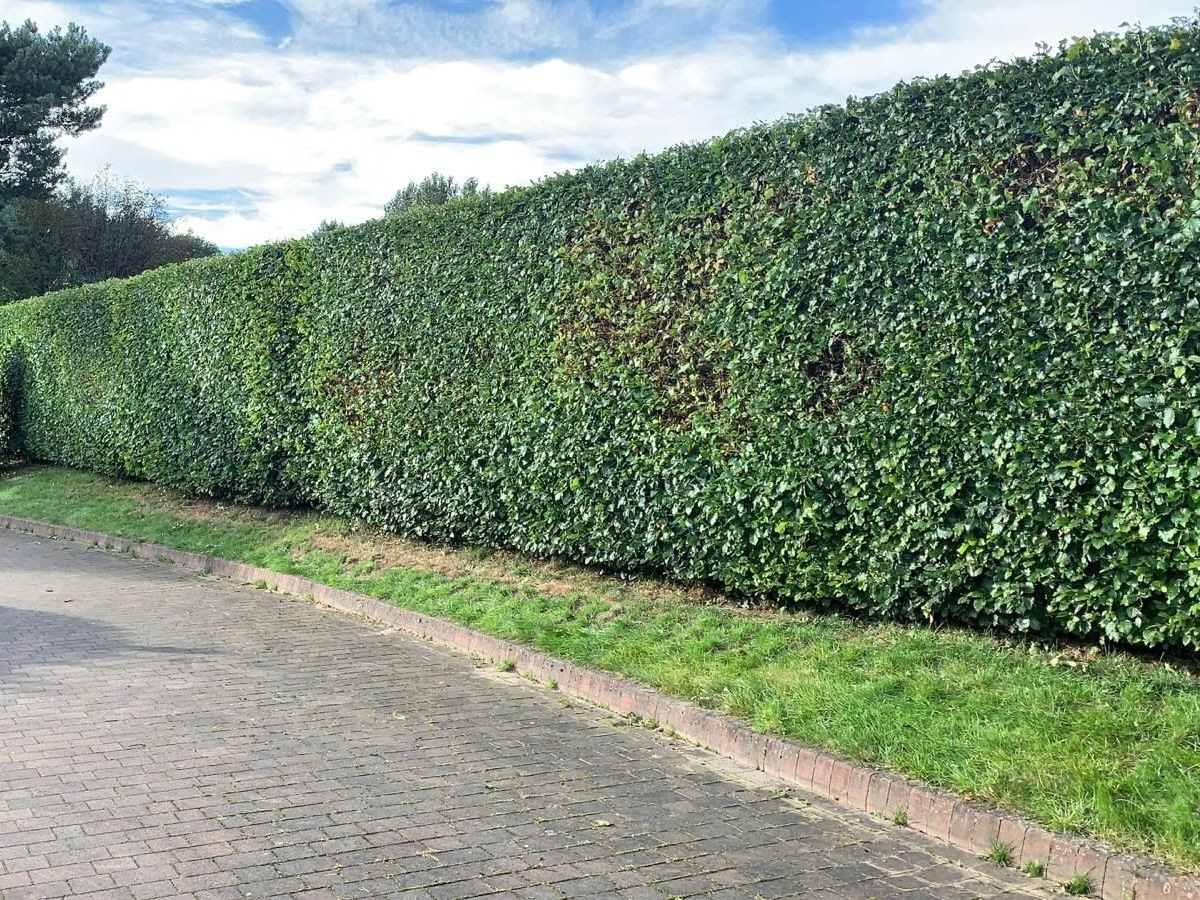
You can cut a garden hedge in Scotland in any month of the year. The law protects the nest, and it does so all year round: damage or interfere with a wild bird’s nest while it’s in use or being built and you’ve committed an offence, whatever the date. That’s why most hedges here wait until the birds have finished, and why the main cuts on the Moray coast, from Lossiemouth to Fochabers, come from August into September, with apples and pears pruned in winter and plums in midsummer.
If you’d rather hand the whole job over, Regular Hedge Care and Tree and Fruit Tree Pruning sit in the Additional Services on our services page, and are usually added within a running programme.
Is it illegal to cut hedges in summer in Scotland?
No month is closed to hedge cutting in a Scottish garden. What the law covers is the nest. Under the Scottish version of section 1 of the Wildlife and Countryside Act 1981, it’s an offence to ‘intentionally or recklessly’ take, damage, destroy or otherwise interfere with the nest of any wild bird while that nest is in use or being built, or to obstruct or prevent a bird from using its nest.
That word ‘recklessly’ is where Scotland parts company with other parts of the UK, whose version of the same section says only ‘intentionally’. In plain terms, not meaning to harm a nest may not protect you if you didn’t take the trouble to look.
NatureScot is quite firm here. Asked whether you can cut your garden hedge when birds are nesting, NatureScot’s answer is no, and it advises waiting until the chicks have fledged and the nest is no longer in use, which ‘may be only a month or so’.
Where the 1 March to 31 August rule comes from
You’ll often hear that hedge cutting is banned from 1 March to 31 August. That rule exists, but it’s written for farms. The Scottish farm rules for land managers claiming support, known as GAEC 7 on Rural Payments and Services, stop hedge trimming during the bird nesting and rearing season between those dates. It doesn’t bind your garden. It’s still a useful guide, because it follows the main breeding season closely.
When is the bird nesting season in Moray?
NatureScot’s planning advice says the bird breeding season ‘runs in the main from March to August’, and that it varies between species, which is the important part. You’ll find it in NatureScot’s standing advice on birds. The RHS adds that it ‘can be longer’.
So treat March to August as the months to look before you cut, and treat an active nest as a stop sign in any month. A nest still in use in September is just as protected as one in May.
On our programmes, routine hedge trimming stops from early March until June or July, unless a hedge has been checked and is clear. Checking properly takes a few minutes. Stand back and watch: birds flying in and out with food or twigs tell you there’s a nest. Leave that stretch alone and come back once the young have gone.
When to cut each hedge, species by species
Informal hedges usually need one cut a year, and formal ones one, two or three. The RHS guide to pruning hedges gives the best timing for the hedges we see most often in Moray gardens. These are UK-wide timings, so I’ve added where we adjust them for here:
- Beech: once, in late summer. We give beech its one cut in August, so it holds its copper leaves through the winter.
- Hornbeam: once, in mid to late summer. Ours is cut in August alongside the beech.
- Hawthorn: twice, in summer and autumn, for a formal hedge. On our programmes, hawthorn and mixed native hedges wait until late winter, once the birds have had the berries, and are finished before nesting starts in early March.
- Leylandii: two or three times in the growing season, and not after August. The RHS warns that trimming conifers after August can encourage bare patches.
- Privet: two or three times in the growing season.
- Cherry laurel: twice in the growing season. Secateurs give a better finish than a trimmer, because trimmers slice the big leaves in half and leave them browning.
- Holly: once, in late summer.
- Yew: twice, in summer and autumn. Ours takes its autumn cut in September.
- Box: two or three times in the growing season.
Put that list next to the nesting season and you can see the squeeze. Privet and leylandii want their cuts during the very months birds are most likely to be using them. A June trim on either can go ahead only once the hedge has been checked and is clear.
September is our main trimming window. Nesting is over and growth is slowing, so a cut then holds its shape through winter, and privet, box and laurel get a last light tidy. Leylandii is the exception, with the tightest window of all: most birds have finished by late summer, yet conifers shouldn’t be trimmed after August, which can leave only a few weeks for the main cut.
If you have box, look it over for caterpillars as you trim; the RHS box tree caterpillar advice explains what to look for.
Why the Moray coast changes the timing
The Met Office’s 1991 to 2020 averages for Lossiemouth show 670.6 mm of rain a year, against 1,572.65 mm for Scotland as a whole. It’s one coastal station, so take it as a guide, but the ground near the Firth dries out quickly.
This year made the point. By 20 August 2026, SEPA reported that the previous six months had been extremely dry mainly in Moray, with some extremely low river flows along the Moray coast, in its water scarcity report for that week. Even after the autumn rain, the Findhorn was still at Early Warning on 22 October.
Dry ground affects hedges in two ways. A hedge cut in a hot, dry spell has to regrow with little water, so trim when the weather isn’t too hot. And a renovated hedge needs watering through any long dry spell in its first growing season afterwards, which on sandy coastal soil can mean a lot of watering.
Can you cut back an overgrown hedge?
Usually, yes, as long as you pick the right hedge, the right season and the right pace. The RHS hedge renovation guide says to renovate deciduous hedges in midwinter, when they’re dormant and bare, and evergreens in mid-spring, once they’re growing and the risk of frost has passed.
On the Moray coast we leave overgrown evergreens such as privet and laurel until late spring, and only once the hedge has been checked and is clear. Even Lossiemouth, on the coast, still averages 2.83 days of air frost in April.
Beech, box, hawthorn, holly, hornbeam, Lonicera nitida (a small-leaved shrubby honeysuckle) and yew can all be reduced by as much as half their height and width in a single cut. Anything harder is better staged over two or three years. Cut one side back in the first year, the other side in the second and the height in the third, giving the hedge a full growing season to recover between each stage. On our Moray Garden Year, overgrown beech and hawthorn are reduced in midwinter in exactly this staged way, so they stay green.
Conifers are the exception. Most of them, yew apart, won’t regrow from old brown wood. With an overgrown leylandii, the RHS suggests reducing the height by up to a third in April and thinning the side branches, and it warns that a hedge cut down by more than a third may stay flat and bare on top. Sometimes the honest answer is to replace a conifer hedge rather than fight it.
Notice that April and late spring both fall inside the nesting season, so these are exactly the jobs that need a careful look for nests first.
How high can a hedge be in Scotland?
No law in Scotland sets a maximum height for a garden hedge. The Scottish Government’s revised guidance on the High Hedges (Scotland) Act 2013 is clear that growing leylandii is not illegal, and neither is owning a hedge over two metres tall.
The Act gives you a way to deal with a neighbour’s hedge that spoils the reasonable enjoyment of your home. To count as a high hedge, it must be formed wholly or mainly by a row of two or more trees or shrubs, rise more than two metres above ground level, and form a barrier to light. The height is measured from the ground where the hedge grows, which is usually on the owner’s side. The Scottish Act covers all types of hedge, deciduous as well as evergreen.
You can’t go straight to the council. You must take all reasonable steps to settle it first, and the guidance suggests two formal approaches to your neighbour within six months, with copies of your letters kept.
If that fails, the application in Moray goes to the Council. Moray Council’s high hedges guidance gives the fee as £401 and says an application won’t be accepted until it’s paid, so check the current fee with the Council before you apply.
When should you prune apple and plum trees in Moray?
Apples and plums want opposite seasons.
Free-standing apples and pears are pruned in winter, while the tree is dormant, which the RHS winter pruning guide puts between November and early March. Routine pruning removes about 10 to 20 per cent of the canopy. Go harder and the tree answers with a thicket of fast, upright shoots called watershoots (soft vertical growth that rarely fruits). An old, neglected tree is brought back over several winters rather than in one.
Plums are pruned in April or July, never in winter. The RHS plum pruning guide explains that winter cuts raise the risk of silver leaf, a fungal disease that gets into plums and their relatives through wounds. Young trees are pruned in spring and established ones in midsummer. Our Moray Garden Year follows the same rule: plums and cherries wait for summer.
Protected trees, and when you need a tree surgeon
Before anyone takes a saw to a tree in Moray, check whether it’s protected. Moray Council’s trees guidance explains that, with few exceptions, work on a tree with a Tree Preservation Order needs the Council’s permission. In a conservation area, the Council should be given six weeks’ written or email notice of work on any tree whose trunk is more than 7.5 cm across, measured 1.5 metres above the ground. Trees can also be protected by a planning condition or your house deeds.
The maximum fine for breaking these rules is £20,000. Applications for work on protected trees are free, but they must be backed by a report from a qualified arborist (a tree specialist) at Level 4 or above. The Council’s interactive map shows where they apply.
We prune apples, pears and garden trees. We aren’t tree surgeons. Felling, climbing work on large trees and any work that needs an arborist’s report are jobs for a qualified tree surgeon, and we’ll tell you so if we see one.
How this works on the programme
Hedges and trees are added to the planned programmes rather than booked as one-off visits.
Regular Hedge Care is scheduled trimming, once or twice a year, timed for the hedge and the nesting season, and added to any programme. Beech gets one August cut; privet and leylandii get cuts timed around a nest check. The hedge trims are part of your programme price.
Tree and Fruit Tree Pruning covers winter pruning of apples, pears and garden trees. It’s generally added as part of a Garden Programme, where the winter visits (two on Standard, four on Premium) carry the structural work. The Garden Programme page sets out both levels.
The Complete Garden Programme brings lawn, garden and mowing together on one plan, with hedges and trees included where your garden needs them.
Start by sending your postcode and what needs doing through the form on our contact page, with pictures if you like. We’ll visit and measure up, and you get a programme in writing setting out the year’s visits, priced once and split into twelve equal monthly payments. The cost depends on how much hedge there is, its height and species, access, and how many cuts it needs a year. Whether green waste is taken away depends on the job and the programme, and it’s agreed before your written quote. The Moray Garden Year shows what happens in each month.
Where we work and what we take on
Our garden work runs from Cullen to Alves and up the Spey to Aberlour, which includes Elgin, Moray. If you’re on the edge, ask; postcodes decide it. We work only for private homeowners, with no commercial or estate work. Hedge care is added to a programme, so we don’t take on single hedge cuts. Tree and fruit tree pruning and winter clear-downs are the two jobs you can book on their own.
Hedge cutting in Scotland: your questions
When is it illegal to cut hedges in Scotland?
Whenever cutting would damage, destroy or interfere with a wild bird’s nest that’s in use or being built, or stop a bird using it. The risk is highest from March to August, but the offence applies in any month. There are no fixed closed dates for garden hedges.
Can you cut hedges in July in Scotland?
Yes, if the hedge has been checked and has no active nests. July is still nesting season, so look first. For beech, waiting until August is better anyway.
When should I cut a beech hedge in Scotland?
Once a year, in late summer. On the Moray coast we cut beech in August, after most birds have finished. Cut then, beech holds its copper leaves through winter. Hard reductions are done in midwinter, staged over two or three years.
When can I trim a leylandii hedge?
Two or three times in the growing season, finishing by the end of August, because later cuts can leave bare patches. Earlier cuts fall in nesting season and need a check first. Leylandii won’t regrow from old wood, so never cut into the brown.
Can I cut back my neighbour’s hedge?
Moray Council’s guidance on overhanging branches says a neighbour has common law rights to have branches cut back to the boundary, working with the owner and keeping the tree healthy, unless the tree is protected. The wood should be returned unless you agree otherwise. For a hedge over two metres that blocks your light, the High Hedges Act is the formal route.
Can you do a one-off hedge cut?
Not on its own. Regular Hedge Care is added to a programme so each hedge is cut at the right time every year. Tree and fruit tree pruning and winter clear-downs can be booked separately.