Your lawn is full of moss because the conditions in and around it suit moss better than grass. The RHS says mosses ‘readily appear in lawns when the growing conditions favour them over lawn grasses’. The usual reasons are grass that’s thin, hungry, compacted, shaded or growing on acid ground. Put those right and the moss has far less room to settle.
You’d expect a wet climate to be behind it, and sometimes it is. Yet the SEPA autumn water situation report 2025 recorded the driest hydrological year in eastern Scotland since 1976, from October 2024 to September 2025. And the RHS lists grass weakened by drought stress among the common causes of moss. Here on the Moray Firth, a dry year can set the scene for a mossy one.
I learned to read turf as a greenkeeper, five years of it at Loch Lomond Golf Club. Since 2014 we’ve looked after lawns across Moray from our base in Mosstodloch. Most lawn problems follow the same path: name what you’re seeing, find the cause, then act in the right season. Our Lawn Programme is built around that order.
What is your lawn trying to tell you?
Most lawn problems have a look of their own. Spend a minute on the grass with these signs in mind and you’ll usually know what you’re dealing with:
- Green and spongy underfoot: moss, filling spaces the grass has left.
- Pink or reddish threads on bleached, light-brown patches: red thread, a fungal disease that shows up most in late summer and autumn.
- Yellowish patches turning brown, sometimes with white or pink cottony growth at the edges: fusarium patch, at its worst from autumn to spring and known as snow mould after a thaw.
- Small round holes and birds working the lawn: leatherjackets or chafer grubs below the surface.
- The whole lawn going straw-coloured in a dry spell: drought, with the grass resting rather than dying.
A lawn can show two or three of these at once. When it does, they often share a cause, which is good news, because one fix can deal with several.
Moss is the one we’re asked about most, so we’ll start there.
Moss isn’t the villain, so what is?
Moss moves into gaps. It doesn’t push healthy grass out; it waits for the grass to step back.
The RHS lists the common causes as sparse, weak or patchy grass (from drought stress, shade or mowing too low), worn areas, compacted soil or poor preparation before the lawn went down, a damp climate or waterlogging and acid soil. The RHS guide to algae, lichens, liverworts and mosses adds a lack of aeration and low fertility. Compaction, by the way, simply means soil pressed so tight that air and water struggle to reach the roots.
Read that list again with a Moray year in mind. A long dry spell thins the grass, a wet winter follows, and the moss arrives in ground the grass gave up months earlier. If your lawn looked tired at the end of 2025’s dry summer and spongy the following spring, the two are quite likely connected.
That’s why we look at a mossy lawn as a record of the past year rather than a fault in the grass.
And it’s worth saying that moss is no disaster. The RHS points out that it’s soft, low-growing and fine to walk on, and that birds collect it from lawns for their nests. Some people decide to let a shady corner go mossy and enjoy it. If you’d rather have grass, though, the next question is why the moss keeps returning.
Why does moss keep coming back every spring?
Because the conditions that invited it are still there. The RHS is clear on this: ‘There are no products to kill moss permanently’, and a mosskiller only works for a while unless the conditions that let the moss in are changed.
If you do use one, the RHS notes that many contain iron sulphate. It kills the moss, but the dead moss turns black and still has to be raked out. Iron sulphate sold as a lawn fertiliser shouldn’t be used against moss unless it’s part of a proprietary, HSE-approved lawn mosskiller, so check the packet before you buy.
Raking or scarifying gets the moss out. Scarifying means running a machine or a spring-tined rake through the lawn to pull out moss and thatch, the matted layer of dead material around the base of the grass. The RHS suggests October or early November, when the grass is growing strongly. That timing is written for the UK as a whole. The part to hold on to in Moray is the condition: the grass must still be growing strongly enough to fill the gaps before winter. Our guide to scarifying, aeration and overseeding in Moray explains how we judge that.
Then comes the part most people skip: thickening the grass, feeding it and opening up the soil, so there’s nowhere left for the moss to settle.
So here’s a question to ask of your own lawn. If the grass were thick enough, where would the moss start?
Brown, yellow or red patches: which is it?
Patches have a handful of usual causes, and most of them recover. The colour, the time of year and what’s at the edge of the patch will usually tell you which one you’ve got.
Drought scorch
In a dry Moray summer, a lawn on light soil can go brown in a matter of weeks. SEPA’s 2025 report found several north-east rivers had the highest number of low-flow days recorded in a year, which shows how dry the ground around them was. An established lawn browned by drought is usually dormant rather than dead. Our guide to lawn treatments in Moray covers watering in a dry spell.
Red thread
The RHS red thread guide describes it as one of the most common fungal patch diseases on lawns, especially where the turf is short of nitrogen. The reassuring part is that it rarely kills grass completely, and patches can recover within days or weeks.
One line from that guide fits Moray’s lighter soils well: heavy rain can wash nitrogen below the grass roots, especially on light soils. So a lawn that was fed can still go hungry. For a small patch, the RHS suggests sulphate of ammonia at 15g per square metre, never after August.
Fusarium patch
The RHS calls fusarium patch ‘one of the most damaging diseases of turf grasses’. It’s most common from autumn to early spring, and very noticeable after snow melts, when it gets the name snow mould.
No fungicides are currently available to amateur gardeners for lawn diseases, so prevention does the work. The RHS advice is to help the lawn dry quickly after rain or dew by improving aeration and drainage, to cut back overhanging branches for airflow, to brush off heavy morning dew and to avoid high-nitrogen feeds in late summer and autumn.
Some damage can’t be seen from the window at all, until the birds find it.
Why are birds digging up my lawn in autumn?
Usually because there’s food under the turf. The RHS leatherjacket guide names crows, magpies, rooks and starlings as birds that search turf for leatherjackets, the grubs of crane flies (daddy-long-legs), leaving small round holes where their beaks went in.
I’d treat the birds as an early warning. They find grubs long before you’d see the yellowish-brown patches leatherjackets leave by eating the grass roots.
You can check for yourself. The RHS suggests soaking a patch of lawn, covering it overnight with something that blocks the light, such as black polythene, and looking underneath the next day. If leatherjackets are the problem, plenty of them will have come up to the surface.
The weather plays a part in both directions. The RHS says leatherjackets are often more numerous after a wet autumn, because damp conditions help the eggs and larvae survive, while dry soil when the flies are laying, from August to October, can mean many eggs fail to hatch.
The garden control is biological: nematodes, microscopic worms watered into the lawn that infect the grubs. They need moist, well-drained soil at 12°C or more, and the RHS suggests using them from September to early October as prevention. Timing is everything here, because ‘by the time damage becomes apparent, the soil may be too cold for nematodes to be effective’. On a Moray lawn, that warm-soil window can close quickly.
There’s no chemical fallback for home lawns. A GOV.UK government response confirms that chlorpyrifos use against leatherjackets on amenity turf in the UK expired on 31 August 2015. The alternative insecticide that followed has only been allowed on golf courses, gallops, racecourses and airfields. For a garden lawn, healthy turf and well-timed nematodes are the way forward. Leatherjacket Control is one of the lawn extras in our Additional Services.
The same birds dig for chafer grubs too, so take a look at what’s under the turf before deciding what you’re treating.
What’s going on under the grass?
Most of what you see on a lawn starts below it. Roots, drainage and soil chemistry decide how well grass can hold its ground against moss, disease and drought.
Soil pH is a measure of how acid or alkaline the ground is, and many mosses like it low. The James Hutton Institute’s Geochemical Atlas for Scottish Topsoils puts the pH of cultivated soils around the Moray Firth at between 5 and 7, which runs from moderately acid to neutral. If you’re curious about your own ground, the Institute’s free SoilFinder map shows the soil types across Scotland.
Open, well-fed soil gives grass deep roots, and deep roots ride out a dry June, shrug off a wet winter and leave moss very little room. Feeding is covered in our lawn treatments guide, and aeration in the scarifying guide.
Sometimes the ground has been compacted, starved or worn for so long that repairs only go so far. So it’s worth asking of your own lawn: does it need repairing, or does the ground beneath it need rebuilding?
How this works on the programme
On the Lawn Programme, we work on the conditions behind moss, thin grass and disease through the whole year rather than chasing each problem as it appears. There are two levels. Standard brings five feed, weed and condition treatments, plus autumn scarifying and hollow-tine aeration, which lifts small cores of soil out of the lawn to let air, water and roots in. Premium brings six treatments, including one that prepares the lawn for winter, hollow-tining, scarifying in both spring and autumn and our 3 stage Drought Assist Programme for the dry spells the Moray coast is known for.
Leatherjacket Control and Lawn Rebuilds can be added to the programme from our Additional Services, along with overseeding and top dressing as lawn extras.
We don’t offer one-off treatments or single scarifies. Lawn problems take a year of work to sort out, so the programme runs as a year. We visit, measure the lawn and give you a written quote, then spread the cost over twelve equal monthly payments. Lawns are priced by size, in bands of under 200, 200 to 600 and 600 to 800 square metres, with larger lawns priced individually. The Lawn Programme page sets out Standard and Premium in full.
Where we work and what we take on
We look after private homes in Moray. Lawn care covers the triangle between Cullen, Nairn and Aberlour, including Buckie, Elgin, Forres, Fochabers, Lossiemouth, Keith and the villages in between. Our programmes are planned for the whole year, so we don’t take on single cuts or one-off lawn jobs.
Frequently asked questions
Does scarifying get rid of moss?
It removes the moss you can see, and it does the most good when the grass is growing strongly enough to fill the gaps afterwards. For it to last, the lawn also needs feeding and aerating so the moss doesn’t find a way back in.
When should I apply moss killer to my lawn in the UK?
Follow the timing on the product label, and only use a proprietary mosskiller approved by the HSE. Most people find it fits best before scarifying, so the dead moss comes out with the rest.
What are the signs of leatherjackets in a lawn?
Yellowish-brown patches that lift easily, grey-brown legless grubs up to 30mm long in the top layer of soil and birds pecking small holes in the turf.
Is moss in a lawn good or bad?
Neither, really. It’s a sign of the conditions. Some people welcome it in shade for its softness and the wildlife it supports, while others want an all-grass lawn and decide to remove it.
Why is my grass dying in patches?
Drought, red thread, fusarium patch and grubs are the usual suspects. The colour, the season and what you find when you lift the turf will normally narrow it down.
Do you do one-off moss treatments?
No. Moss comes back while the conditions stay the same, so we work on it as part of the Lawn Programme across the year.
A lawn that wins its own battles
The isn’t a lawn that never sees moss, disease or grubs. It’s grass strong enough to crowd them out on its own, so each problem finds less room every year.
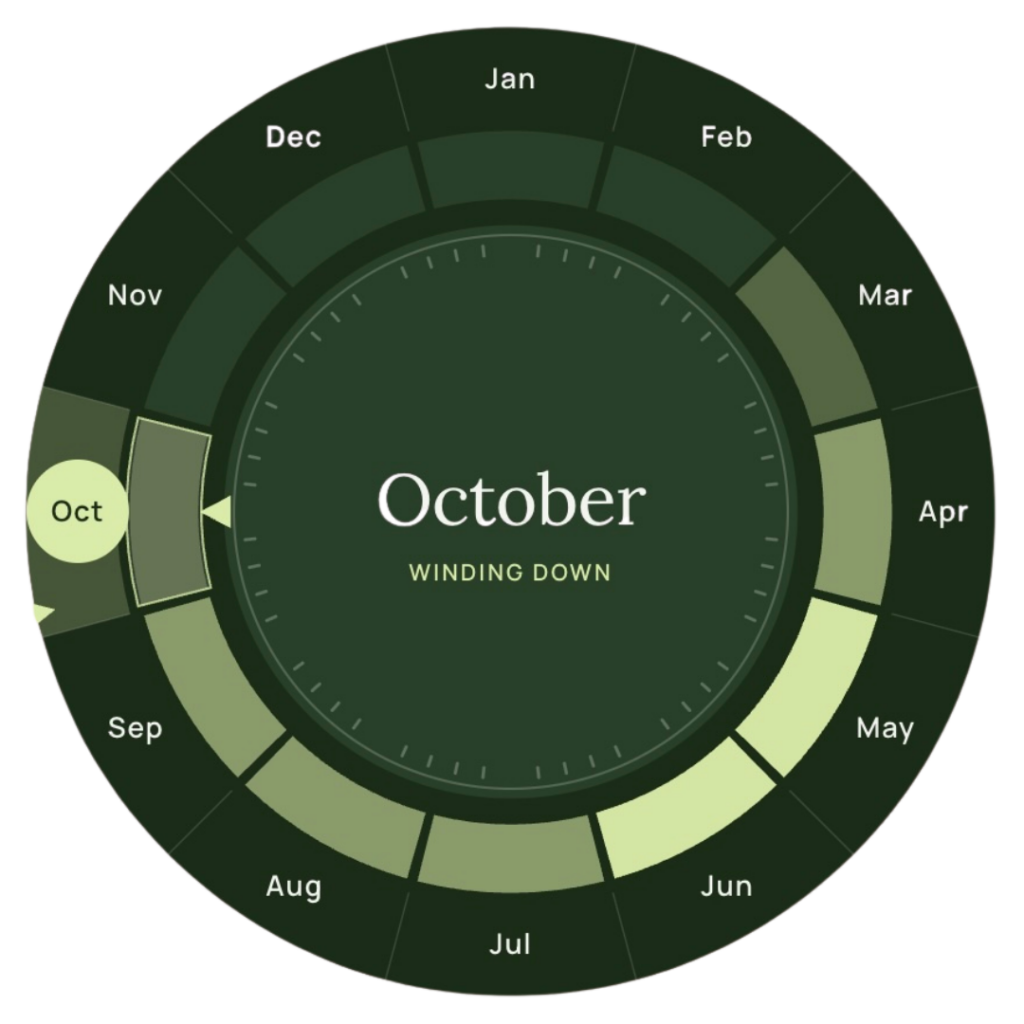
The seasons ahead give you a natural order to work in. Now, in autumn, watch the birds and lift a corner of turf if they keep coming back. From February to April, the moss shows its true extent, and that’s the time to plan rather than panic. Next September brings the window for scarifying and nematodes while the soil still holds its warmth. The Moray Garden Year sets out the months.
Expect progress over a season or two rather than overnight, and expect the weather to move the dates. A lawn that comes through a wet winter and a dry June in better shape each time is the sign that it’s working.