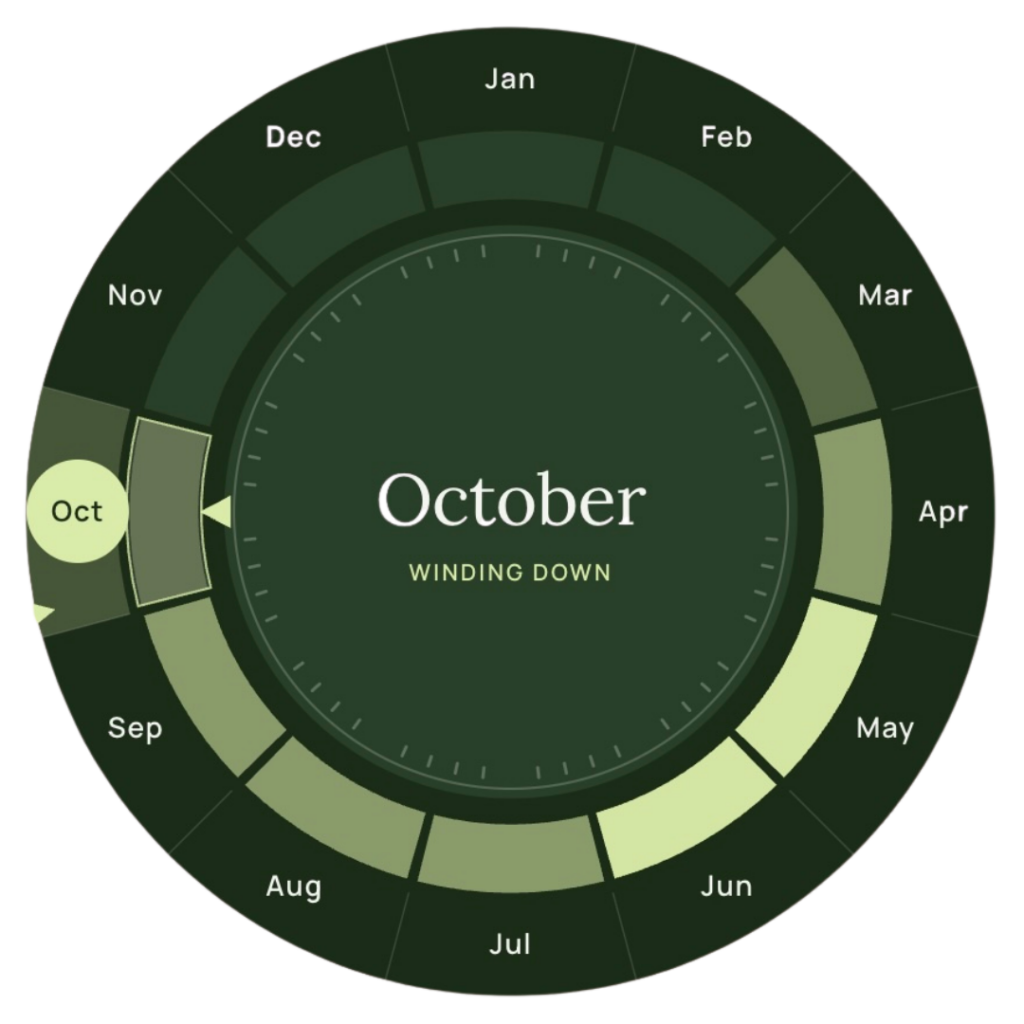
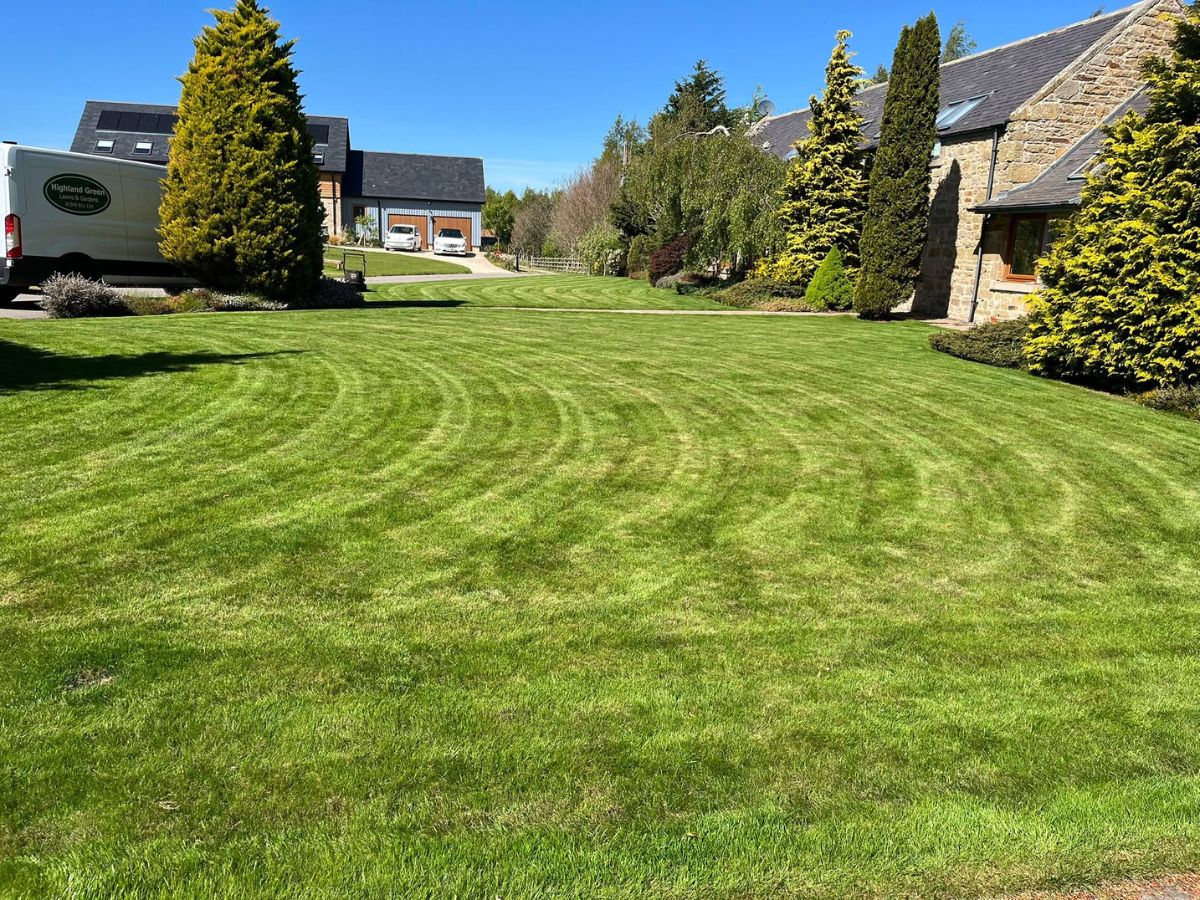
Start cutting when the grass is visibly growing and the ground is firm underfoot, which on the Moray coast tends to be late March rather than early. Make the first cut on the highest setting, taking the tips only. Finish with a last, higher cut in October, and in any month keep the mower off soft, wet or frozen ground.
The calendar is a weaker guide than it was. The RHS advice on how to mow a lawn says ‘changes in seasonal weather patterns mean that it is no longer easy to predict when and how often you should mow’. The grass is the better guide.
I spent five years as a greenkeeper at Loch Lomond Golf Club and helped prepare the PGA Centenary Course at Gleneagles for the 2014 Ryder Cup. Since 2014, we’ve looked after lawns across Moray from Mosstodloch. Mowing is the job your lawn gets most often, so every habit you bring to it repeats a dozen times or more a year.
Why does the Moray mowing season start late and finish early?
Grass barely grows below about 7°C, the threshold our Moray Garden Year works to. On the coast, growth usually starts late in March and has all but stopped by November, so advice written for southern England runs early for us.
Warmth alone doesn’t make a mowing day, though. The Met Office spring 2026 summary recorded Scotland as the only UK nation to finish spring wetter than average, with 107 per cent of its usual rainfall, while its mean temperature ran 0.8°C above the 1991 to 2020 average. Warm and wet means grass growing on ground too soft to carry a mower.
That’s the trap at both ends of a Scottish season. Waiting a few days costs little, while ruts and compaction (soil squeezed so tight that air and water struggle to reach the roots) cost far more.
How short should you cut grass?
For an ordinary garden lawn, the RHS lawn mowing guide gives 13 to 25 mm in summer and up to 40 mm in spring and autumn, with one rule for any height: ‘never take off more than one-third of the grass height’ in a single cut.
The same guide notes that fine lawns ‘are kept shorter and mown more frequently than ordinary domestic lawns’, and a golf green is the far end of that scale. Keep a garden lawn low on an occasional schedule and the roots stay shallow, suffering first in a drought and leaving gaps for weeds and moss. Mowing too low is among the causes in our guide to lawn problems in Moray.
Through a Moray year, the height follows the growth:
- First cut, late March or April: the highest setting, tips only.
- Spring: around 40 mm, lowered a notch at a time as growth speeds up.
- Summer, in good growth: towards the top of the 13 to 25 mm range for a lawn that’s walked on.
- Dry spells: raised again and cut less often.
- Autumn: back up towards 40 mm, with the last cuts set higher.
- Mild winter spells: an occasional light trim on a high setting, on firm ground only.
How often should you mow?
Weekly when the grass is growing hard, fortnightly either side and rarely in winter. That’s the standard UK rhythm from March to October, easing to fortnightly or longer in a summer drought.
The one-third rule ties height to frequency. A lawn kept at 25 mm has to be cut before it passes about 37 mm, while one kept at 40 mm can reach 60 mm first. That’s 20 mm of growth between cuts against just over 12 mm, so if you’d rather mow less often, raise the height to match.
Missed a cut in May? Two cuts a few days apart, the first one higher, are kinder than one hard cut that exposes the pale stems beneath the leaf.
The first cut of the year and the last
The first cut
Choose a dry day when the grass is growing and your shoes don’t sink. Clear twigs and stones and brush off dried worm casts so the wheels don’t smear them in. Then take the tips off on the highest setting. Long grass comes down in stages: strim and rake off the worst first, then let the one-third rule set the pace, so grass at 9 cm goes to 6 cm on one cut and 4 cm on the next.
The last cut
October’s final cuts go on at a higher setting. Scalping the lawn to save a cut gains nothing, because grass left at around 4 cm goes into winter with more leaf to feed its roots and more cover over the soil. Through the winter, leave the lawn alone unless a mild spell keeps it growing.
Mowing in a dry spell
Raise the height, cut less often and stop if the grass stops growing. Longer leaf shades the soil, and cutting short in a Moray dry spell is the quickest way to brown a lawn.
Provisional Met Office figures for July 2026 gave Scotland 69 per cent of its average rainfall and 127 per cent of its usual sunshine. On the light, free-draining ground of the Firth coast, a month like that shows up a short-cut lawn first.
Short clippings under a centimetre can stay on the lawn to help hold moisture in, and watering is covered in our guide to lawn treatments in Moray.
Grass clippings! Collect them or leave them?
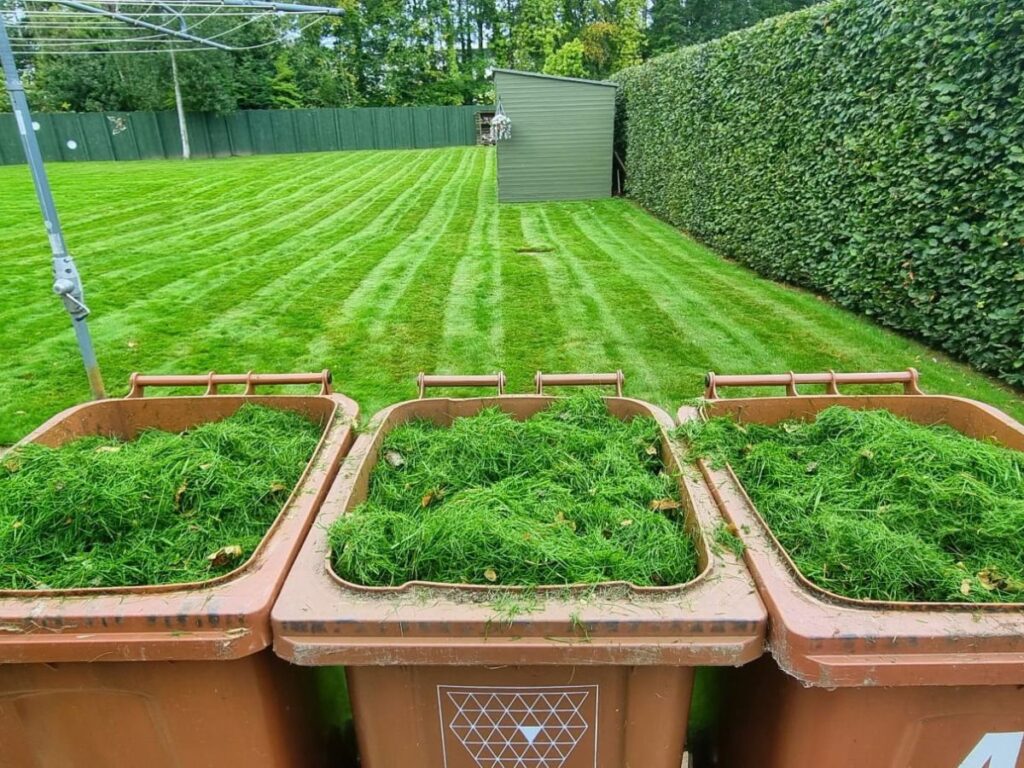
Both have their place. Collecting is tidier and can help keep some lawn fungal problems at bay, and long or wet clippings left lying mat into clumps that block the light. Mulching mowers chop clippings finely and return them to the base of the grass, giving back some nutrients and helping hold moisture in, though on long grass they leave more than the lawn can take. After a selective weedkiller, the label says what to do with them.
Collected clippings need a home. Under Moray Council’s garden waste permit scheme, a brown bin of garden waste is only emptied if it shows a valid permit, and the lorries can only lift bins under 100 kg. Anything extra can go free to a recycling centre or onto the compost heap, mixed with drier material such as shredded prunings.
Should you mow wet grass?
Not if you can wait. Very wet ground compacts and ruts under the mower, and wet grass clogs it and cuts raggedly. Frost is worse. Our Garden Year notes that footprints on frozen grass crush the crowns (the growing point at the base of each plant) and show for months. Sit out spells of cold, drying wind too.
A heavy dew often lifts by late morning, so a later start may be enough. In a long wet spell, pick the driest part of the day, raise the height and bring it back down in stages once the weather turns.
Mowing after scarifying or a lawn treatment
After a feed or weedkiller
Granular feed needs rain or watering to wash it into the soil before you mow, or the grass box can lift it straight back off. Weedkiller labels usually say how long to leave the lawn either side of mowing. After one of our treatment visits, the note we leave tells you how long to wait.
After scarifying or overseeding
Scarifying rakes out thatch (the layer of dead grass and moss at the base of a lawn) and leaves the grass thin for a while, so the first cut afterwards takes the tops off only. Grass from new seed needs to reach at least 5 cm before it’s cut, on the highest setting. The full order of work is in our Moray guide to scarifying, aeration and overseeding.
Edges and strimming
Edges are what make a mown lawn look finished. Mow a lap around the outside first for room to turn and another at the end to tidy the marks. Then trim with long-handled shears or a strimmer held on its side. A blurred bed edge can be re-cut with a half-moon edging iron on a dry winter day. Before strimming long grass under a hedge, check it for hedgehogs, and keep the line off tree bark.
Sharp blades and the robot question
Blades and settings
A blunt blade rips and tears the grass, leaving ragged tips that turn brown. If the tips look frayed or whitish a day after mowing, the blade is due a sharpen, and winter is the time for a service.
Robot mowers
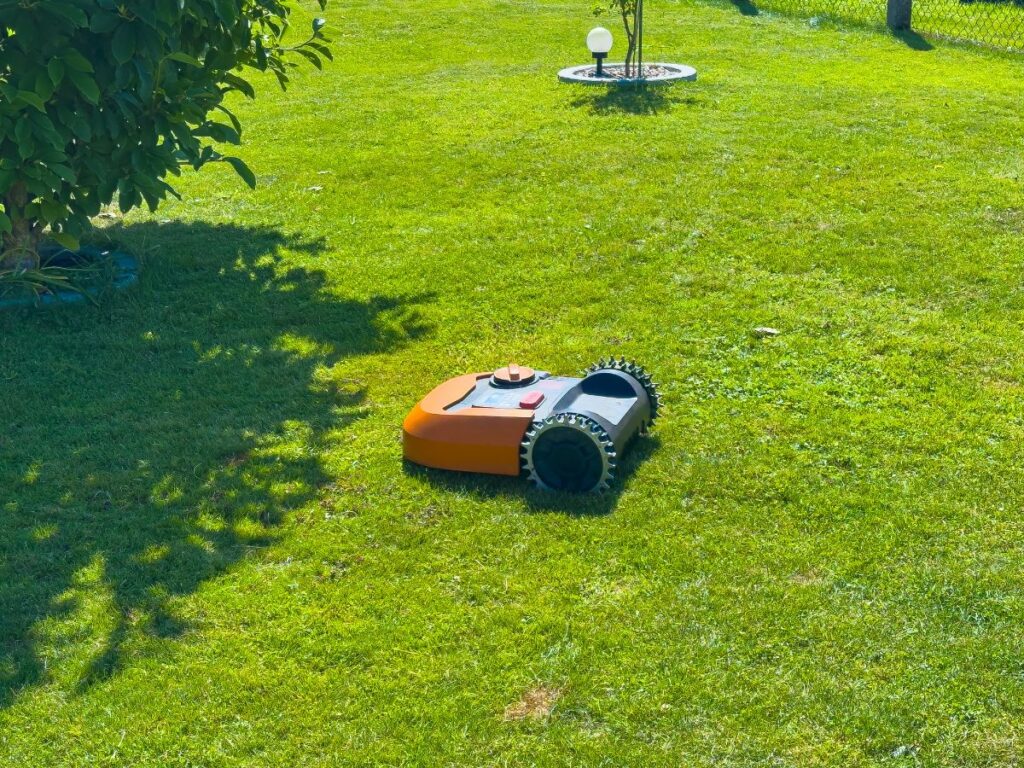
Robot mowers suit some gardens. Their little-and-often trims apply the one-third rule for you, though they cost more up front and take some setting up, and any edges they miss still need trimming.
Hedgehogs are the bigger question. Dr Sophie Lund Rasmussen led the University of Oxford research behind a hedgehog safety test for robot mowers, and her finding, reported by Oxford Biology, was clear: “All the robotic lawn mowers I tested had to physically touch the hedgehog in order to detect it, and some did not even detect the dead hedgehog.” The advice published with the research is to check the lawn first and run the mower only in daylight. That care counts. In October 2024, the IUCN Red List update moved the Western European hedgehog from Least Concern to Near Threatened.
How this works on the programme
When you’d rather hand the mowing over, the Mowing Programme puts a team on your lawn on a fixed fortnightly cycle, with extra weekly visits in the high season and the edges prepared in spring. We set the height for the season and the weather, higher in dry spells and lower in good growth, with stripes if the lawn suits them. Edges are trimmed, awkward spots strimmed and paths, patios and driveways blown clear. You don’t need to be in.
You’ll get a message before and after each visit. The Garden Year sets the season at 20 cuts between March and October; from November, visits pause or move to as-needed while the monthly payment stays the same. The Mowing Programme page sets out what’s included. It’s priced by lawn size after a visit to measure, with a written quote and twelve equal monthly payments.
The team also feeds, scarifies and aerates, so they’ll tell you about any moss, leatherjackets or red thread they spot. If you’d rather keep mowing, the Lawn Programme handles the feeding, weed control, scarifying and hollow-tine aeration. Mowing can be added to it on one schedule and one payment.
Where we work and what we take on
We look after private homes across Moray, including Elgin. Our Mowing and Garden Programmes run from Cullen to Alves and up the Spey to Aberlour, and our lawn care covers the triangle between Cullen, Nairn and Aberlour. We do not take on commercial, estate or contract work.
Questions about mowing a Moray lawn
When can I start cutting the grass in Scotland?
When the grass is visibly growing and the ground takes your weight without leaving prints. On the Moray coast that’s usually late March, later inland or on higher ground.
How short should I cut grass before winter?
Not short. Around 4 cm is a sensible height to go into winter, with October’s last cuts set higher. A scalped lawn faces the cold months with bare soil showing, which is where moss gets in.
Can I cut the grass in November?
Yes, if a mild spell keeps it growing and the ground is firm. Growth is slight below about 7°C, so it’s usually one light trim on a high setting, if that. Never mow frosty or waterlogged grass.
How long should new grass be before its first cut?
At least 5 cm, for a lawn sown from seed and for overseeded patches alike. Mow on the highest setting with a sharp blade, taking the tips only.
Should I cut the grass in a heatwave?
Only if it’s still growing. If it has stopped or started to brown, leave it until the rain returns. Otherwise, cut early or late in the day on a raised height and leave the short clippings on.
Do you do one-off cuts?
No. Our mowing runs as a scheduled programme, which keeps the lawn at a steady height all season. If you’d like your lawn cut regularly, we’d be glad to quote.
Let the grass set the timetable
Every mowing decision comes back to one habit: look at the grass before you look at the date. Is it growing? Is the ground firm? How much would this cut take off?
Height is the other half. A lawn cut a little longer gives you more time between cuts, copes better in the dry and leaves moss less room, which is why the heights in a good mowing year rise at both ends.
When the grass starts to move again in spring, it will tell you it’s time.